Home | About | Services | Process | Resources | Library | FAQs | Contact | Privacy
Legal Consultancy, Debt Counselling & Debt Review in South Africa
A Legal Resource for Debt Review, Credit Law and Consumer Protection
The door to a future without debt.
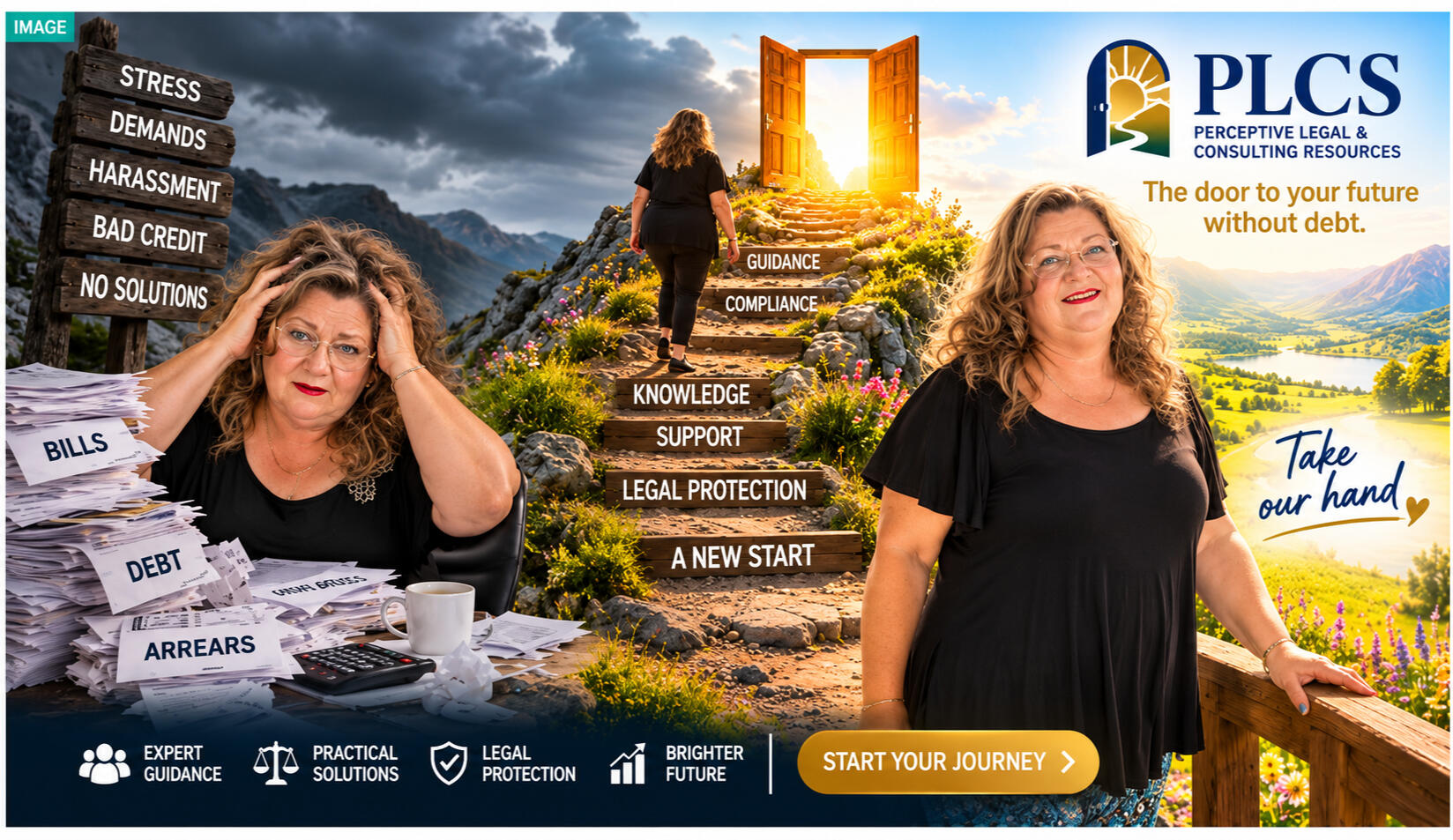
Professional Legal Consulting. Debt Review Expertise. Practical Solutions.When debt starts to affect your peace of mind, taking the first step can feel difficult. At PLCS, we listen, help you understand your position and explain the options available to you. You will know who is handling your matter and what is needed next.Debt counselling is led by Ancil van Heerden, registered debt counsellor NCRDC164, with office support from Sonnette Kretschmer.
Our Vision
To be a trusted South African legal consultancy recognised for expertise in credit law, debt review, consumer protection and regulatory compliance, empowering individuals and professionals through knowledge, integrity and practical solutions.
Our Mission
To provide independent, professional legal consulting, debt counselling, compliance guidance and practical education, helping consumers understand their rights and obligations while supporting industry professionals in applying the National Credit Act accurately, ethically and effectively.
Important Information
An enquiry is not an application for debt review. Debt counselling is a formal process. Fees and credit restrictions apply. It does not cancel debt or guarantee a particular outcome. We explain the implications before you decide to apply.
Contact Us
Whether you're struggling with debt repayments, need assistance with an existing debt-review matter or are seeking professional guidance, PLCS welcomes your enquiry.We understand that financial difficulties can be stressful. Our approach is personal, practical and focused on helping you understand your circumstances and the options available.
Contact PLCS
Speak to Ancil van Heerden |
Registered Debt Counsellor since 2007: NCRDC164
Office Manager: Sonnette Kretschmer
Telephone: 079 325 9402
Email: [email protected]
How to Make an Enquiry
To help us understand your needs, please provide:- Your name
- Your preferred contact method
- A brief description of the assistance you requireIf you have received a Section 129 notice, summons or other urgent legal correspondence, please mention this when contacting us. We will explain the next steps and how to provide any supporting documentation if required.

Your Privacy Matters
Please do not include identity numbers, banking details, passwords or sensitive financial documents in your initial enquiry.We handle personal information in accordance with applicable South African privacy legislation, including the Protection of Personal Information Act (POPIA).
Important Information
Making an enquiry does not automatically place you under debt review.Formal debt counselling requires an application and assessment in accordance with the National Credit Act. We explain the process, applicable fees, restrictions and potential consequences before you decide whether to proceed.
Take the First Step
Contact Ancil today to discuss your circumstances and explore the options available to you.
Our Services
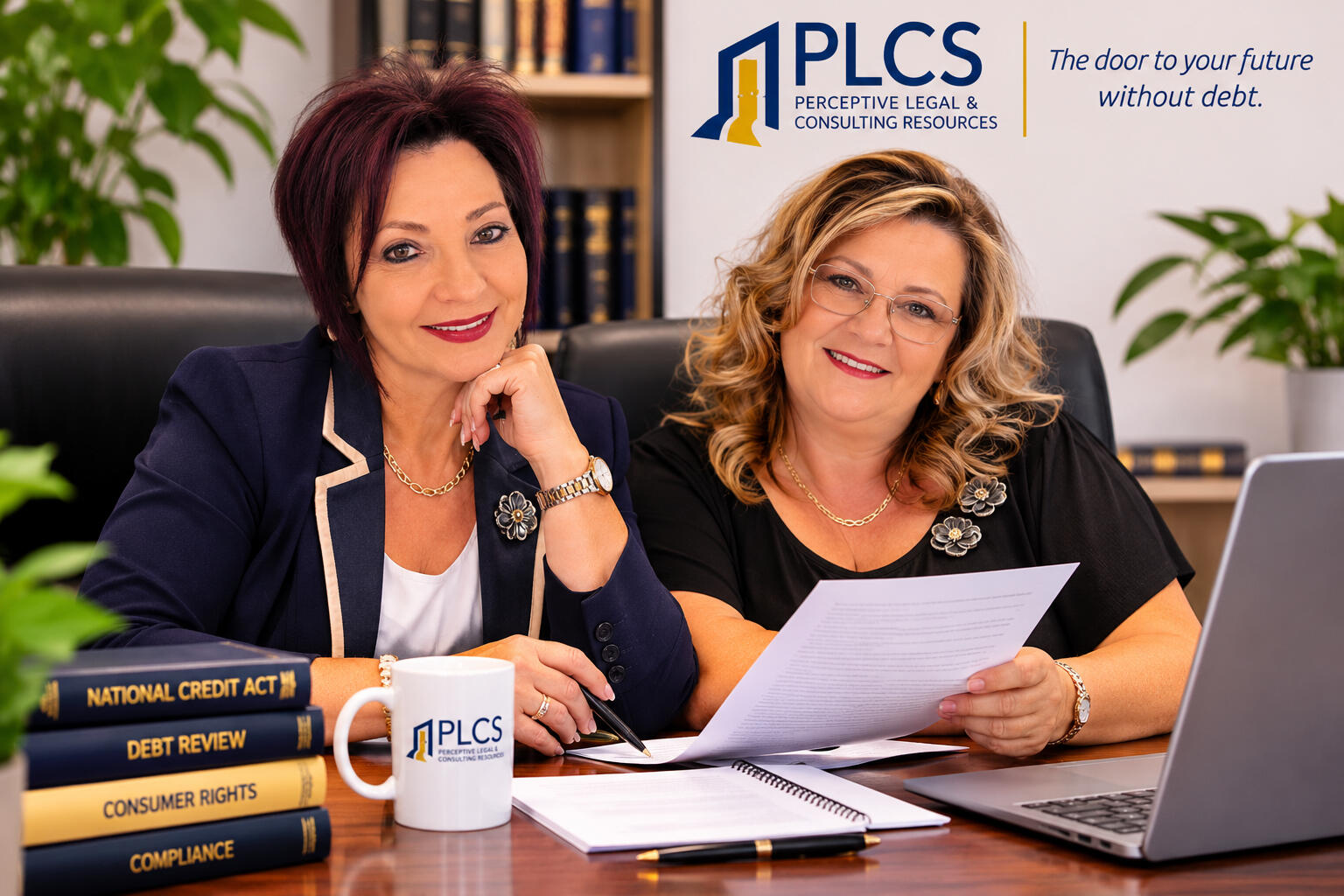
Personal Debt Counselling
For consumers struggling with credit repayments, Ancil assesses your financial circumstances, explains whether debt review may be appropriate and guides you through the process.Where appropriate, this includes preparing repayment proposals, engaging with credit providers and arranging the required legal referrals.
Aftercare and Account Enquiries
We assist with debt-review progress enquiries, payment-distribution queries, account information and follow-up on existing arrangements.Consumers are encouraged to report payment difficulties or disputed account information promptly so these matters can be investigated.
Debt-Review Status and Clearance Enquiries
We assess the documentation and current status of your debt-review matter before explaining the available options.Clearance, transfers between debt counsellors and correction of inaccurate information are separate processes. We do not promise immediate removal of debt-review indicators.
Debt Counselling Practice Setup
Drawing on Ancil's extensive industry experience, PLCS assists new debt counsellors with establishing their practices.Services may include office setup, administrative procedures, mentoring and practical training, with the scope and fees agreed in advance.
Training and Professional Development
PLCS welcomes enquiries about practical debt-review training, workshops and professional support.Ancil is developing Debt Review: Back to Basics (BTB), a learning resource connecting the National Credit Act with the practical requirements of debt counselling.Training availability, materials and fees are confirmed before an engagement is accepted.
Court Processes, Oppositions and Credit Enforcement
PLCS provides comprehensive, practice-oriented training on debt review court processes and procedures, including the preparation of court applications, supporting documentation, oppositions, credit enforcement proceedings and relevant provisions of the National Credit Act.The training draws on legislation, court rules, relevant case law and practical industry experience to help debt counsellors and other industry professionals understand procedural requirements, identify common errors and prepare legally sound documentation.
Consumer Financial Wellness
PLCS welcomes discussions with employers, credit providers and other organisations about consumer financial education, responsible referrals and financial wellness initiatives.Participation and referrals respect consumer choice and confidentiality.
Fees and Scope of Services
We explain the proposed services, applicable fees and any separate legal or third-party costs before you commit.PLCS does not provide loans or promise debt write-offs. Court representation is arranged through appropriately authorised legal practitioners.
Prescription of Debt and Credit Agreement Disputes
PLCS assists consumers in understanding prescription under the Prescription Act and its application to credit agreements.We assess account histories, payment records, acknowledgements of liability, debt review arrangements and relevant legal proceedings to determine whether a debt may have prescribed or whether prescription may have been interrupted.Where appropriate, we assist consumers with disputed or potentially prescribed accounts, credit provider correspondence and credit bureau information.Prescription is not automatic in every case. Each matter requires an individual assessment of the facts, applicable legislation and relevant case law before any recommendation can be made.
Training and Consumer Wellness
Debt Review: Back to Basics (BTB)
Ancil van Heerden is developing Debt Review: Back to Basics (BTB), a practical learning resource connecting the National Credit Act with the everyday requirements of debt counselling.The programme explores credit agreements, financial assessments, repayment proposals, negotiations, court preparation, aftercare, governance and professional accountability. Training enquiries are welcome. Programme availability, course materials, dates and fees will be confirmed separately.
Mentoring New Debt Counsellors
Establishing a debt counselling practice involves more than understanding the legislation.Ancil has assisted new debt counsellors in establishing their offices and provides practical guidance on administration, file management, consumer communication and professional responsibilities. Mentoring arrangements are tailored to individual requirements, with the scope and fees agreed in advance.Each practitioner remains responsible for their own registration and regulatory obligations.
Professional Standards
PLCS requires its support team to complete the eight-volume BTB programme and relevant assessments, together with practical training in the systems used for their assigned responsibilities.This training does not confer NCR registration or authorise support staff to perform functions reserved for registered debt counsellors.
Consumer Financial Wellness
PLCS welcomes discussions with employers, credit providers and other organisations about consumer financial education and wellness initiatives.Our objective is to help consumers recognise financial difficulties, understand the assistance available and make informed decisions without pressure. Participation is voluntary, and referrals must respect confidentiality and individual choice.Under the proposed credit-provider referral initiative, PLCS does not pay or receive referral commissions.
Received a Section 129 Notice?
If you have received a Section 129 notice under the National Credit Act, read it carefully and seek advice promptly.A referral to PLCS does not replace the statutory notice or automatically suspend legal proceedings. Please tell us about any existing legal action when making an enquiry.
Important Training Information
BTB is a practical professional learning resource. No external accreditation or endorsement is claimed. Participation does not replace any legally required qualification or professional registration.
About PLCS

Experience, Responsibility and Personal Attention
Perceptive Legal & Consulting Resources CC (PLCS) is an independent South African legal consultancy specialising in credit law, debt review, consumer protection, regulatory compliance and professional education.Drawing on extensive legal, operational and industry experience, PLCS provides practical guidance to consumers, debt counsellors, credit providers and other industry stakeholders.Our approach combines legal knowledge, professional integrity and personal attention. We believe that understanding the law, knowing your rights and making informed decisions are essential to achieving sustainable solutions.
Meet the Founder — Ancil van Heerden
B.Proc • LLB • Admitted Advocate of the High Court of South Africa
Registered Debt Counsellor: NCRDC164Ancil has worked in debt counselling since 2007. Her professional background includes banking, legal and compliance work, senior leadership in the debt-review industry, and practical training.She brings this experience to the assessment of consumers' financial circumstances, engagement with credit providers and development of appropriate debt-review solutions.Ancil has also assisted new debt counsellors in establishing their practices, providing mentoring and practical industry training.She is developing Debt Review: Back to Basics (BTB), a professional learning resource connecting the National Credit Act with the practical requirements of debt counselling.At PLCS, Ancil is responsible for professional debt counselling decisions, recommendations and statutory sign-off.
Meet the Office Manager — Sonnette Kretschmer

Sonnette brings more than 14 years of experience in debt-review administration, consumer service, executive complaints and communication with credit providers and legal representatives.She coordinates office administration, documentation, consumer enquiries and follow-up, working closely with Ancil to ensure matters receive appropriate attention.
Our Values
Clear communication, confidentiality, accuracy and accountability are central to our approach.We treat consumers with dignity, engage credit providers professionally and believe that informed consumers are better equipped to take control of their financial futures.
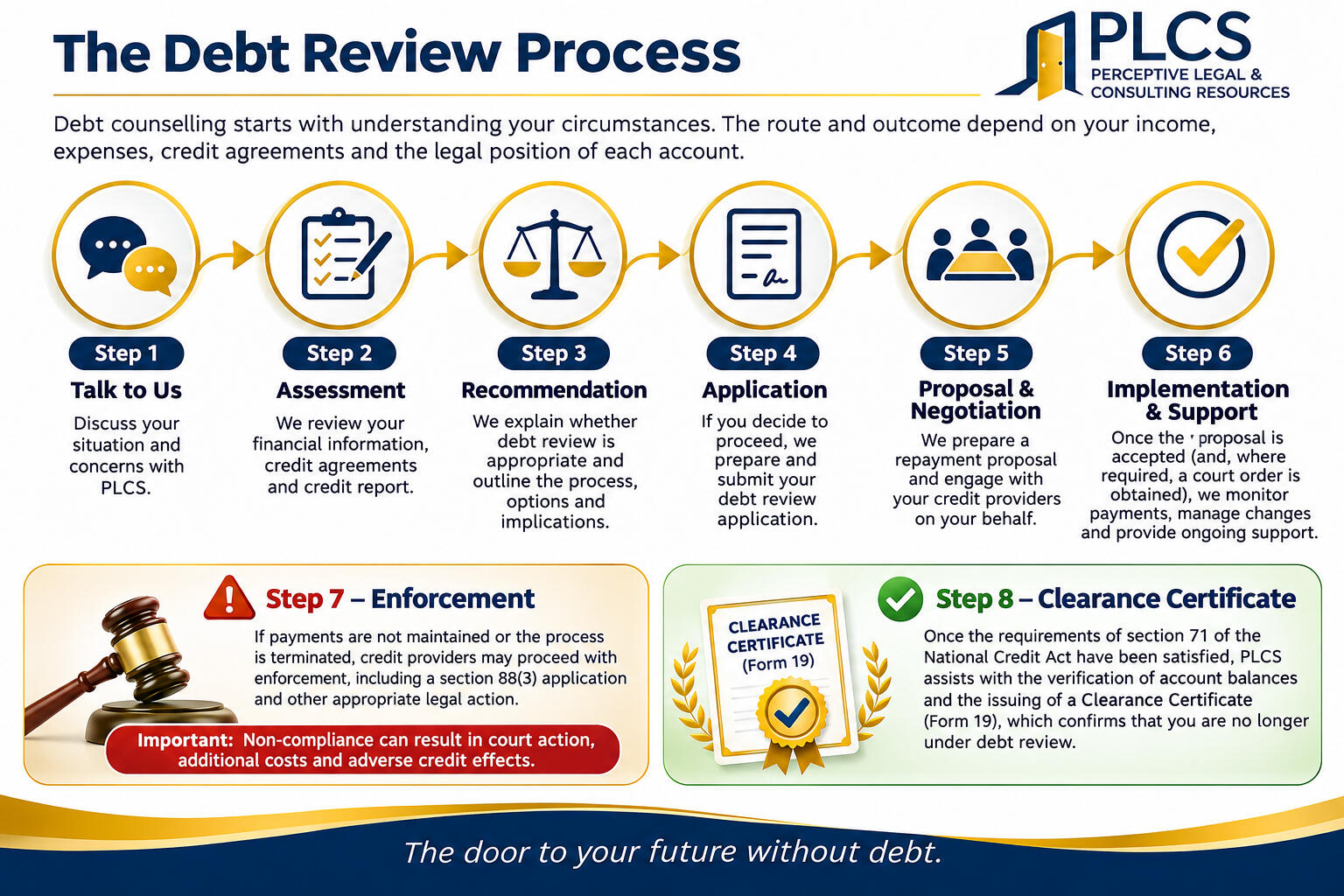
Debt counselling starts with understanding your circumstances. The route and outcome depend on your income, expenses, credit agreements and the legal position of each account.Step 1 — Talk to UsTell us what is happening and whether you have received any legal notices. We explain the debt counselling process, applicable fees and potential consequences.An initial enquiry does not place you under debt review.Step 2 — Apply and Provide Your InformationIf you decide to apply, we guide you through the formal application process and required documentation. This usually includes identification, income and expense information, account details and relevant legal documents.Ancil assesses the information and carries out the required notifications and enquiries.Step 3 — Consider a Realistic ProposalWhere appropriate, Ancil develops a repayment proposal based on your verified financial circumstances. She engages with the affected credit providers to explore suitable arrangements.Proposed concessions and reduced instalments are not guaranteed.Step 4 — Follow the Appropriate Legal ProcessThe assessment and applicable legal requirements determine the next steps. Matters requiring a court decision are referred to court. Qualifying agreed arrangements may follow the statutory consent-order process.PLCS explains the appropriate process and the role of any legal practitioner involved.Step 5 — Make Payments and Stay InvolvedFollow the applicable payment instructions and keep records of your payments. Contact PLCS promptly about account enquiries, changes in circumstances or difficulty making payments.A payment distribution agent distributes funds but does not replace the debt counsellor's responsibilities or your obligation to make payments.Step 6 - Check Eligibility for ClearanceWhen the requirements of Section 71 of the National Credit Act are satisfied, the debt counsellor addresses the clearance process. A qualifying mortgage may remain in place where the statutory conditions are met.Step 7 - Enforcement: Important WarningFailure to comply with payment obligations may expose a consumer to credit enforcement, subject to the requirements of the National Credit Act.Depending on the circumstances, enforcement may involve termination of debt review under section 86(10), enforcement following default under a rearrangement agreement or order in terms of section 88(3), or other applicable legal proceedings.Consumers should seek assistance immediately upon receiving a section 129 notice, termination notice or summons. Available remedies depend on the facts and the stage of proceedings.Step 8 - Clearance Certificate: Your AchievementOnce the requirements of section 71 of the National Credit Act have been satisfied, the debt counsellor must issue a Clearance Certificate (Form 19) within the prescribed period.Clearance may be possible even where a qualifying mortgage agreement remains outstanding, provided the statutory requirements are met.PLCS assists with verifying account settlements, outstanding balances and the requirements for clearance from debt review.Who May Issue a Clearance Certificate?A Clearance Certificate (Form 19) under the ordinary debt review process is issued by a registered debt counsellor in accordance with section 71 of the National Credit Act.Neither the National Credit Regulator (NCR) nor an attorney may simply substitute themselves for the debt counsellor and issue Form 19 under the ordinary debt review procedure.An attorney may provide legal assistance, and the NCR exercises its statutory regulatory functions. Where a debt counsellor refuses or fails to issue a certificate despite the requirements being met, the consumer may approach the National Consumer Tribunal in terms of section 71(3).Consumers should be cautious of anyone promising debt review removal without following the applicable statutory process.
Your Responsibilities
• Provide complete and accurate information.• Regularly check your credit reports and report incorrect information or suspected identity theft.• Read documents carefully before signing.• Ask questions whenever something is unclear.• Keep records of your payments.• Report changes in your financial circumstances promptly.• Maintain payments in accordance with your applicable obligations and any debt rearrangement agreement or order.Protect Your Identity and Credit InformationRegularly review your credit reports to ensure that your personal information, credit agreements, account balances and payment histories are accurate.Immediately report unfamiliar accounts, unauthorised credit enquiries, incorrect information or suspected identity theft to the relevant credit bureau, credit provider and your debt counsellor.Do not assume that an enquiry or pending request changes your existing payment obligations or automatically stops legal enforcement.
FAQ
What is debt counselling
Debt counselling is a statutory process under the National Credit Act that assists consumers who are over-indebted or experiencing, or are likely to experience, difficulty meeting their credit obligations. A registered debt counsellor assesses the consumer's financial circumstances and recommends appropriate measures in accordance with the Act, which may include debt rearrangement.Debt counselling does not cancel or write off your debt. You entered into credit agreements and remain responsible for repaying your lawful debts. The purpose of debt counselling is to help you manage those obligations through an affordable, legally recognised repayment arrangement, where appropriate.
Will interest stop, or will every payment be reduced?
There is no automatic interest freeze or guaranteed reduction in repayments. We explain what can realistically be proposed in your circumstances.
Can I keep using credit?
No. Once you have formally applied for debt review, section 88(1) of the National Credit Act restricts you from using existing credit facilities or entering into new credit agreements, except for a qualifying consolidation agreement, until the applicable statutory restrictions cease.Your debt review status is recorded with the credit bureaus. Credit providers must take this status into account and should not grant further credit contrary to the Act.
What are the consequences?
If a credit provider grants new credit while your debt rearrangement remains in force, the new agreement may be declared reckless under section 88(4).However, section 88(5) also provides that the over-indebtedness and reckless-credit protections in that Part of the Act do not apply to a credit agreement entered into contrary to section 88. You may therefore remain liable for the new debt without those protections.Always consult your debt counsellor before applying for or using further credit.
Will my home or vehicle be safe?
Debt counselling may provide important legal protection, but it does not guarantee that your home or vehicle cannot be repossessed.Protection depends on the legal status of each credit agreement, whether enforcement proceedings have commenced, and whether you comply with the applicable repayment arrangements.Tell your debt counsellor immediately if you receive a section 129 notice, summons or any other legal document.
What does debt counselling cost?
Debt counselling fees are subject to the applicable NCR fee guidelines. We explain the fees in writing before you commit, including any restructuring, aftercare, legal or third-party costs that may apply.You are entitled to understand what you are paying for and when those fees become payable.
Can I leave debt review whenever I want?
No. Once you have formally applied for debt review, you cannot simply cancel the process at any time.The lawful options depend on the assessment outcome, the stage of the proceedings and whether a debt rearrangement order or agreement exists.A transfer to another registered debt counsellor does not cancel your debt review status or any existing court order.IMPORTANT: YOU CAN PAY MORE AND BECOME DEBT-FREE SOONER!If your financial circumstances improve, you may increase your monthly repayments or make additional payments towards your outstanding debts.Paying more can reduce your outstanding balances, save interest and shorten your repayment period.Always inform your debt counsellor so that additional payments are correctly allocated and your repayment progress can be monitored.You do not have to wait until the end of your original repayment term to settle your debts and qualify for clearance, provided the requirements of section 71 of the National Credit Act are satisfied.
What if I cannot afford my next payment?
Contact your debt counsellor immediately, preferably before your payment becomes due.Explain the change in your financial circumstances and provide supporting documents where necessary. Your debt counsellor can assess whether negotiations or appropriate legal remedies are available.Do not unilaterally reduce or stop payments. A proposed change does not automatically amend an existing repayment arrangement or court order, and default may expose you to enforcement.
Does contacting PLCS automatically place me under debt review?
No. Contacting PLCS, submitting an enquiry or requesting information does not automatically place you under debt review.Debt review is a formal statutory process under section 86 of the National Credit Act. A consumer must make an application to a registered debt counsellor, who must assess the consumer's financial circumstances and determine whether the consumer is over-indebted.You may contact PLCS for information, guidance or an initial consultation without automatically entering the debt review process.An enquiry is not a debt review application.
How long does debt counselling take?
There is no fixed repayment period applicable to every consumer.The duration depends on your outstanding debts, repayment capacity, applicable repayment arrangements and compliance with the process.You can shorten your repayment period! If your financial circumstances improve, you may increase your monthly payments or make additional payments towards your outstanding debts. This can reduce interest costs and help you settle your debts sooner.We assess your individual circumstances rather than promise a fixed completion date. Your repayment period may be shortened through increased payments, subject to the applicable arrangements and the requirements for clearance under section 71 of the National Credit Act.
Can a credit provider terminate my debt review?
In certain circumstances, a credit provider may deliver a termination notice under section 86(10) of the National Credit Act, subject to the statutory requirements.Termination does not automatically cancel an existing debt rearrangement court order. The legal position depends on the stage of debt review, the applicable agreements and any court proceedings.Contact your debt counsellor immediately if you receive a termination notice.
What happens if a credit provider rejects my repayment proposal?
A credit provider's rejection does not necessarily end the debt review process.Depending on the circumstances, further negotiations may take place, or the matter may proceed to the Magistrates' Court for consideration under the National Credit Act.
Can a credit provider terminate my debt review and remove me from debt counselling?
Not automatically.Section 86(10) of the National Credit Act permits a credit provider, in certain circumstances, to terminate the debt review process in respect of a particular credit agreement.A termination notice does not automatically terminate the consumer's entire debt review or the debt review of agreements held by other credit providers.Importantly, section 86(10)(b) restricts termination where the debt review application has already been filed in court or the National Consumer Tribunal.The legal effect of any termination must be assessed against the status of the debt review, the applicable court proceedings and the requirements of the Act.A credit provider cannot simply treat the termination of one agreement as permission to terminate every other credit provider's agreement.
Can a credit provider enforce my debt after terminating debt review, and what protection does section 86(11) provide?
A valid termination under section 86(10) may permit a credit provider to pursue enforcement of the affected credit agreement, subject to the applicable requirements of the National Credit Act.However, termination does not itself constitute a court judgment or automatically authorise repossession or execution.Section 86(11) allows the court hearing enforcement proceedings to order that debt review resume, on conditions the court considers just.This protection is not automatic. The consumer must place the relevant circumstances before the court.Consumers who receive a termination notice, letter of demand or summons should seek legal advice promptly.
What happens if I apply for debt review but never make any payments?
Failing to make payments does not automatically cancel a debt review application or remove the consumer's debt review status.Once a formal application has been accepted, the debt counsellor has statutory duties to assess the consumer's financial circumstances and follow the prescribed process.If the consumer fails to cooperate or make payments, credit providers may take lawful steps to enforce their rights, depending on the circumstances.A debt counsellor cannot simply remove a consumer from debt review because no payments were received or because the file has been placed in an internal withdrawal queue.The correct procedure depends on the stage reached in the debt review process, including whether an over-indebtedness determination has been made, whether a proposal has been filed in court and whether a rearrangement order exists.Consumers should request written confirmation of their debt review status and obtain advice before assuming that their application has ended.
Can I dispute an incorrect outstanding balance or a debt that may have prescribed?
Yes. Consumers may dispute incorrect balances, payments that have not been allocated, or debts that may be legally unenforceable due to prescription.Prescription depends on the applicable law and the circumstances, including payments, acknowledgements of liability and legal proceedings. A debt does not automatically prescribe merely because it is old.
Can I request a copy of my debt review documents?
Yes. You should request copies of your debt review application, repayment proposal, applicable court order or consent agreement, payment records and relevant correspondence.Keeping these documents helps you understand your obligations, monitor your progress and resolve disputes.
What happens after I receive my Clearance Certificate?
Once a valid Clearance Certificate (Form 19) has been issued, the prescribed notifications and credit bureau updates must be completed.Consumers should obtain updated credit reports and verify that their debt review information has been correctly updated.A Clearance Certificate does not automatically erase accurate historical payment information or other lawful credit bureau records.
Privacy and Personal Information
At PLCS, we respect your privacy and are committed to handling personal information responsibly and in accordance with applicable South African privacy legislation, including the Protection of Personal Information Act (POPIA).We collect and use personal information for legitimate purposes connected with responding to enquiries, providing debt counselling and delivering our professional services.Please do not include identity numbers, bank details, passwords or sensitive documents in an initial website enquiry. We will explain how to submit supporting documents when required.For questions about your personal information or our privacy practices, please contact [email protected].
Perceptive Legal & Consulting Resources CC, trading as PLCS.
Resources
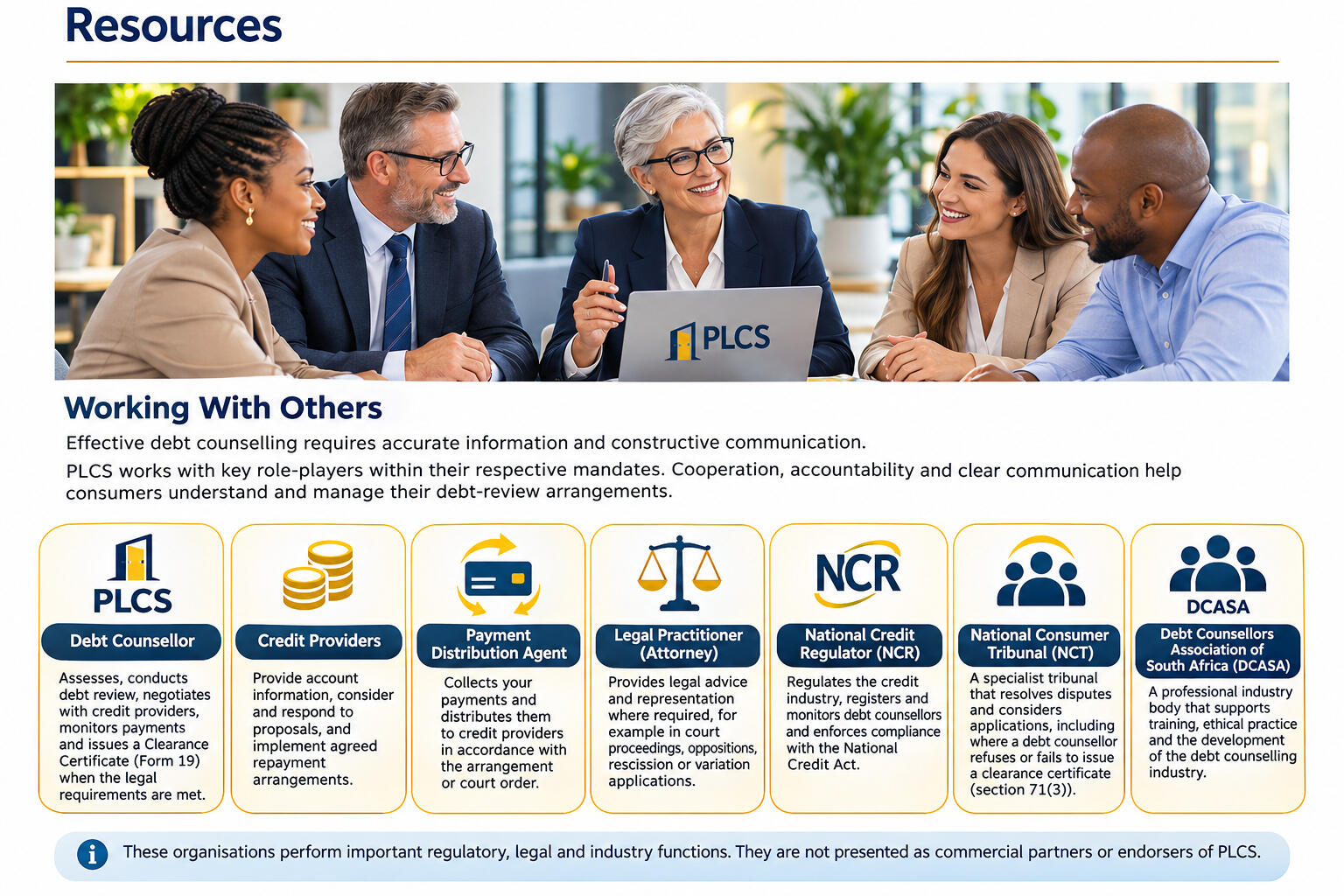
Working With Others
Effective debt counselling requires accurate information and constructive communication.PLCS works with credit providers, payment distribution agents and legal practitioners within their respective professional roles. We believe that cooperation, accountability and clear communication help consumers understand and manage their debt-review arrangements.The National Credit Regulator, National Consumer Tribunal, courts and Debt Counsellors Association of South Africa (DCASA) perform important regulatory, legal and industry functions. These organisations are not presented as commercial partners or endorsers of PLCS.
Newsletters and Media
We aim to share practical information, professional insights and clear explanations about responsible debt counselling. Topics include preparing for debt counselling, understanding payment records, consumer responsibilities and developments affecting the debt-review industry.Articles and updates will be made available as they are prepared and approved.
Resource Library
Understanding your rights and responsibilities is an important part of making informed financial decisions.Our resource library is intended to provide helpful information about debt counselling, the National Credit Act and preparing for your first consultation. Resources may include introductory guides, consumer information and practical document checklists. Only current, approved materials will be made available for download.General information cannot determine the outcome of an individual debt-review matter.
Professional Learning Resources
Ancil van Heerden is developing Debt Review: Back to Basics (BTB), a practical learning resource for debt counselling professionals.For information about BTB materials, professional training or mentoring, please contact PLCS. Training materials are subject to applicable terms of use and are not provided as unrestricted public downloads.
Contact Us
For enquiries about professional collaboration, consumer resources, training or debt counselling, please contact:[email protected]
Consumer & Legal Articles
01 | LEGAL DIRECTIVES & PRACTICE NOTES
01.1 | Termination of Debt Review – Section 86(10)
Debt Review Termination: What Consumers and Credit Providers Need to Know
What does termination of debt review actually mean?A credit provider may, in defined circumstances, terminate the review in respect of its own credit agreement under section 86(10) of the National Credit Act 34 of 2005 (NCA). This does not, by itself, cancel every other credit agreement's debt review or amount to a court finding that the consumer is no longer over-indebted.
The answer depends on the stage of the process: whether a debt-review application is still being assessed whether an application has been filed with a court or Tribunal, whether proceedings were withdrawn, and whether a rearrangement order exists.When is a section 86(10) notice possible?Section 86(10)(a) requires, among other things, default under the particular credit agreement and at least 60 business days after the consumer applied for debt review. The notice must be delivered to the consumer, debt counsellor and National Credit Regulator. Section 86(10)(b) restricts termination once the relevant application has been filed in court or the Tribunal.
A valid termination notice is not itself a judgment or an automatic entitlement to bypass every enforcement requirement. The procedural history and applicable court orders must be checked.Can the court restore debt review?Under section 86(11), when a credit provider proceeds to enforce after a section 86(10) notice, the court hearing enforcement may order that debt-review resume on conditions it considers just. Resumption is not automatic: payment records, communications, feasibility and the consumer's circumstances matter.Can a magistrate reduce the interest rate?A debt rearrangement order may extend the repayment period and reduce the instalment within the statutory powers in sections 86(7)(c)(ii) and 87(1)(b)(ii). These provisions do not give a magistrate a general power to impose a lower contractual interest rate without the affected credit provider's agreement. An agreed concession should be recorded and proved before the court.What happens to the debt review indicator?Section 88(1) concerns restrictions on taking further credit; section 88(3) deals separately with enforcement. Termination in respect of one agreement is not automatically the court outcome described in section 88(1)(b). Clearance under section 71 must also be distinguished from termination.Why accurate balances matterA Certificate of Balance (COB) should give the debt counsellor the contractual rate, dated balance and relevant account details. A later balance movement caused by payments, interest or charges does not necessarily mean that the original COB was wrong. Genuine material errors must, however, be corrected. Regulation 24(4) concerns a five-business-day period following a verification request; it should not be confused with an unconditional five-day COB deadline from Form 17.1.Practical guidanceConsumers should keep copies of Form 17.1, Form 17.2, payment records, proposals, court papers and notices. Debt counsellors and credit providers should identify the particular agreement, the date and basis of any alleged default, the status of proceedings, and the effect of any existing order before acting.
This article provides general legal information, not advice on an individual case. The applicable statutory text, court record and subsequent developments must be checked before action is taken.
PLCS | Educational legal guidance | 5 November 2026
01.2 | Reinstatement of Debt Review – Section 86(11)
01.3 | Enforcement Restrictions – Section 88(1)(b)
01.4 | Certificates of Balance – Regulation 24(4)
01.5 | Statutory In Duplum – Section 103(5)
01.6 | Service of Statutory Notices
01.7 | Credit Provider Obligations and Debt Review Procedures
02 | DEBT REVIEW GUIDELINES
02.1 | Understanding Debt Review
02.2 | The Debt Review Application Process
02.3 | Consumer Rights and Responsibilities
02.4 | Debt Review Payments and Distribution
02.5 | Withdrawal, Transfers and Termination
02.6 | Clearance Certificates and Exiting Debt Review
02.7 | Frequently Asked Questions
03 | COURT PROCESSES & CASE LAW
03.1 | Debt Review Court Applications
03.2 | Consent Orders and Debt Rearrangement Orders
03.3 | Magistrates’ Court Procedures – Rules 55 and 38
03.4 | Credit Enforcement and Legal Proceedings
03.5 | Rescission and Variation of Court Orders
03.6 | Declaratory Orders and Jurisdictional Issues
03.7 | Important Judgments and Case Law
03.8 | Practical Court Guidelines for Debt Counsellors
04 | CONSUMER RIGHTS & PROTECTION
04.1 | Consumer Rights under the National Credit Act
04.2 | Understanding Your Credit Report and Credit Score
04.3 | Incorrect Credit Bureau Listings and Disputes
04.4 | Prescription of Debt
04.5 | Reckless Credit and Affordability Assessments
04.6 | Debt Settlements and Paid-Up Letters
04.7 | Identity Theft and Fraudulent Credit Agreements
04.8 | Consumer Rights during Debt Review
04.9 | Sequestration, Rehabilitation and Credit Records
04.10 | Complaints, Dispute Resolution and Consumer Remedies
05 | DEBT COUNSELLOR RESOURCES
05.1 | Registration, Duties and Responsibilities of Debt Counsellors
05.2 | Form 16 – Applications and Consumer Mandates
05.3 | Form 17.1 and Form 17.2 – Notifications and Assessments
05.4 | Certificates of Balance and Credit Provider Verification
05.5 | Affordability Assessments and Debt Review Proposals
05.6 | Negotiations, Acceptances and Rejections
05.7 | Debt Review Transfers – Form 17.7 and NCR Procedures
05.8 | Payment Distribution and Consumer Payment Monitoring
05.9 | Debt Review Withdrawals, Terminations and DHS Updates
05.10 | Court Applications and Supporting Documentation
05.11 | Clearance Certificates – Section 71
05.12 | Debt Counsellor Compliance, Recordkeeping and Audits
05.13 | Credit Provider Communication and Dispute Resolution
05.14 | Practical Templates, Forms and Checklists
06 | TRAINING & BACK TO BASICS
06.1 | Introduction to Back to Basics (BTB)
06.2 | BTB Volume 1 – Foundations of Credit and Affordability
06.3 | BTB Volume 2 – Credit Reports, Defaults and Credit Risk
06.4 | BTB Volume 3 – Assessments, Calculations and Reconciliations
06.5 | BTB Volume 4 – The Debt Review Process and Negotiations
06.6 | BTB Volume 5 – Court Processes and Credit Enforcement
06.7 | BTB Volume 6 – Credit Provider Objections and Practical Questions
06.8 | BTB Volume 7 – Debt Counsellor Governance and Compliance
06.9 | BTB Volume 8 – Consumer and Credit Provider Rights
06.10 | BTB Volume 8A – Alternative Dispute Resolution
06.11 | Professional Training Workshops and Presentations
06.12 | Practical Training for Debt Counsellors and Support Staff
06.13 | Legal Updates and Continuing Professional Development
06.14 | Training Enquiries and Programme Registration
07 | LEGAL UPDATES & ARTICLES
07.1 | Latest Legal Developments
07.2 | National Credit Act – Legislative and Regulatory Updates
07.3 | Recent Court Judgments and Legal Commentary
07.4 | Debt Review and Credit Enforcement Updates
07.5 | Consumer Rights and Credit Industry Developments
07.6 | Credit Provider Practices and Industry Directives
07.7 | Debt Counselling Industry News
07.8 | PLCS Legal Articles and Publications
07.9 | Frequently Asked Legal Questions
07.10 | Proposed Legislative Amendments and Public Commentary